
Hydrangea Fall Care: How to Prepare Bushes for Winter
Quick answer
Proper hydrangea fall care ensures healthy roots and vibrant blooms next spring. Water your bushes deeply until the ground freezes, mulch the base with two to three inches of organic matter, and stop fertilizing by late summer. Avoid pruning old-wood varieties in autumn to protect next season's flower buds.
Key takeaways
- Water hydrangeas deeply throughout fall until the ground freezes solid.
- Avoid autumn pruning on bigleaf and oakleaf varieties to save next year's flower buds.
- Apply 2 to 3 inches of mulch over root zones after the first hard frost.
- Cease all fertilization by late summer to let plants enter natural dormancy.
- Protect tender varieties in cold USDA zones with burlap or leaf cages.
Quick facts
| USDA Hardiness Zones | Zones 3–9 (varies by species) |
|---|---|
| Sunlight Needs | Full sun to partial shade |
| Fall Watering | 1 inch per week until ground freezes |
| Mulch Depth | 2–3 inches of organic mulch |
| Fertilizer Timing | Stop fertilizing by late summer |
| Pet Safety | Toxic to dogs and cats if ingested |
Essential Hydrangea Fall Care for Winter Readiness
Essential hydrangea fall care helps your favorite flowering shrubs survive harsh winter freeze-thaw cycles and bloom spectacularly when spring returns. As autumn arrives, hydrangeas shift their growth energy away from fresh stems and blooms down into their root systems. Taking proper steps in late autumn prevents stem dieback, keeps roots hydrated, and shields plant tissue from winter damage.
Hydrangeas are generally hardy across USDA Hardiness Zones 3 through 9, but exact cold tolerance depends on the specific species you grow. Proper end-of-season attention keeps plants resilient through freezing wind, cold rain, and snow. Autumn care is not complicated, but doing tasks in the correct order makes a significant difference in bloom production next year.
Why Autumn Preparation Matters
Preparing hydrangeas before cold weather sets in protects vulnerable buds and crowns. Main tasks include:
- Deeply watering root systems before the soil freezes solid.
- Adding protective organic mulch around the crown.
- Clearing away dropped leaves to minimize pest and disease problems.
- Protecting sensitive stems from cold, drying winter winds.
Hydrangea Fall Care Rules for Pruning and Trimming
Following proper hydrangea fall care rules for pruning is essential, as cutting stems at the wrong time can remove next season’s flowers. Hydrangeas fall into two main pruning groups: those that bloom on old wood (stems produced the previous season) and those that bloom on new wood (fresh stems produced in spring).
Old Wood Hydrangeas (Do Not Prune in Fall)
Bigleaf hydrangeas (Hydrangea macrophylla), lacecaps, and oakleaf hydrangeas (Hydrangea quercifolia) set their flower buds in late summer on existing wood. Cutting these bushes back in autumn removes next year’s blooms.
- Bigleaf / Mophead: Leave stems intact over winter. You can remove spent flower heads, but leave the stem structure alone.
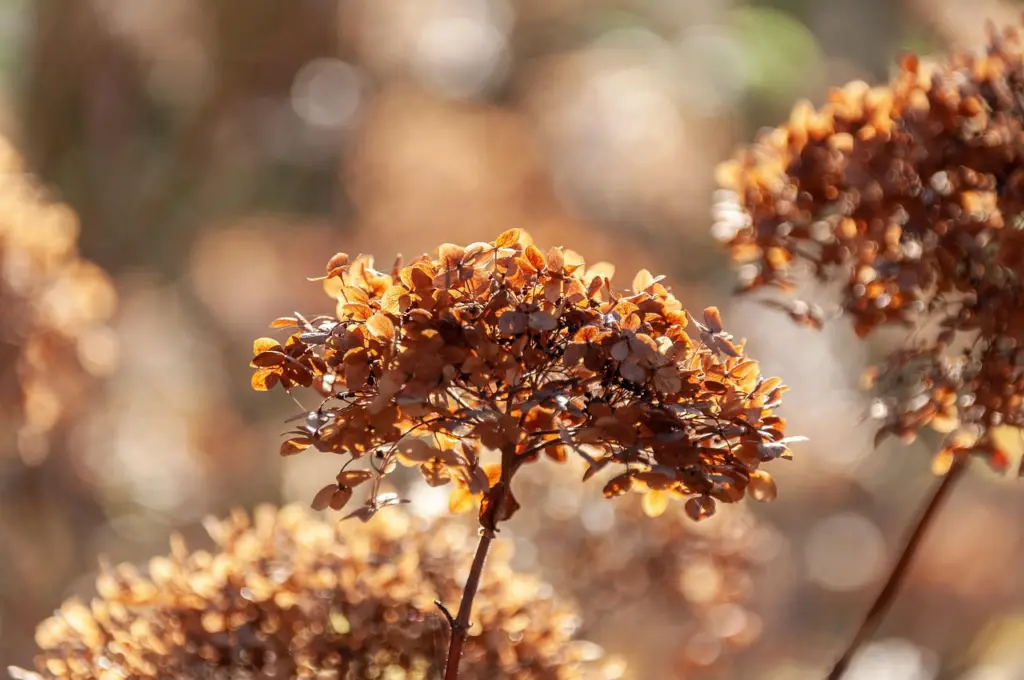
- Oakleaf: Leave foliage and flower heads in place. The dried flower clusters provide structural interest in winter gardens.
New Wood Hydrangeas (Can Be Trimmed)
Panicle hydrangeas (Hydrangea paniculata) and smooth hydrangeas (Hydrangea arborescens, like ‘Annabelle’) form flower buds on newly grown stems in spring. You can lightly tidy up these species in late fall after they enter full dormancy, though many gardeners wait until late winter or early spring.
- Panicle Hydrangeas: Trim off spent blooms and dead tips if desired, but avoid heavy structural pruning until early spring.
- Smooth Hydrangeas: Can be cut back in late fall or early spring to a few inches above the soil line without sacrificing spring growth.
Step-by-Step Hydrangea Fall Care for Cold Climates
Executing structured hydrangea fall care for cold climates prevents frost injury to delicate floral stems. Gardeners in USDA Zones 3 through 5 often need extra layers of protection to preserve old-wood stem buds through freezing temperatures.
- Clean the Base: Rake away all fallen leaves, spent flowers, and weak weeds around the shrub’s root zone to eliminate wintering fungus.
- Water Deeply: Apply 1 to 2 inches of water around the root zone once a week until ground frost sets in.
- Apply Bark Mulch: Mound 2 to 3 inches of shredded wood bark or leaf mold over the root zone, keeping it two inches away from main stems.
- Build a Protective Cage (Optional): For tender bigleaf varieties in cold zones, place stakes around the plant and wrap wire mesh around the outside.
- Fill with Leaves: Loosely pack dry oak leaves or clean straw into the cage surrounding the stems for insulation.
- Cover with Burlap: Wrap breathable burlap around the exterior of the cage to block drying winter winds.
Deep Watering Techniques for Autumn Hydrangeas
Watering hydrangeas thoroughly in autumn is one of the most critical steps to prepare roots for winter conditions. Dry roots are far more susceptible to severe frost damage than well-hydrated roots because moist soil holds ambient ground warmth better than dry soil.
Hydrangeas typically need about 1 inch of water per week through early fall. Continue watering right up until the ground freezes solid in late autumn. When application temperatures hover near freezing, water during the warmest midday hours so moisture absorbs deep into the ground before nightfall frost.
Hydration Rules to Keep in Mind
- Soak the soil 8 to 12 inches deep near the dripline of the plant.
- Avoid splashing water on late-season leaves, which encourages fungal diseases.
- Disconnect hose lines and drip systems before hard freeze warnings occur.
Applying Winter Mulch and Soil Protection
Mulching hydrangeas in fall insulates root structures against severe winter temperature fluctuations that cause soil heaving. Soil heaving occurs when ground freezes and thaws repeatedly, pushing roots upward and exposing delicate plant tissues to cold air.
Wait until after the first hard freeze to apply your winter mulch layer. Applying mulch too early in autumn can trap excessive warmth and moisture around stems, encouraging late-season growth or pest activity.
Best Mulch Materials for Autumn
- Shredded Bark: Excellent overall choice that breaks down slowly and stays in place during windy weather.
- Leaf Mold or Shredded Leaves: Adds rich organic material to the soil while providing insulation.
- Pine Needles: Light, airy material that permits good air circulation without compacting.
Spread a 2 to 3 inch layer around the base of the plant out to the drip line. Always leave a small 2-inch gap between the mulch and the main woody stems to prevent stem rot.
Garden Sanitation and Disease Prevention in Fall
Good end-of-season sanitation removes pest shelters and fungal spores that survive winter cold to infect fresh spring growth. Fungal diseases such as powdery mildew and leaf spot frequently hide on fallen hydrangea foliage during autumn.
Rake up fallen foliage promptly throughout autumn and discard affected material. Do not add diseased hydrangea foliage to home compost piles, as standard compost heat may not eliminate fungal spores completely.
Pet Safety Caution
Keep in mind that all parts of the hydrangea plant contain cyanogenic glycosides, making them toxic to pets including dogs and cats. Ensure trimmed branches, stems, and gathered leaves are disposed of safely where pets cannot chew on them.
Winter Care for Potted and Container Hydrangeas
Container-grown hydrangeas are far more vulnerable to cold winter temperatures because their roots lack the natural insulation provided by ground soil. Root systems in pots freeze much faster than in garden beds.
If you live in USDA Zone 6 or colder, potted hydrangeas need extra shelter to survive the winter safely.
Steps for Protecting Container Hydrangeas
- Move Underground or Indoors: Move pots into an unheated garage, shed, or cool basement after the plant drops its leaves and enters dormancy.
- Bury the Pot: Sink the entire container into an empty garden bed so top soil lines match, then mulch heavily over the surface.
- Water Sparingly: Dormant container hydrangeas stored indoors require minimal water. Check monthly and provide just enough water to keep the potting mix from drying out completely.
Frequently asked questions
Should I cut back my hydrangeas in the fall?
It depends on the variety. Smooth and panicle hydrangeas can be trimmed late in the season, but bigleaf and oakleaf hydrangeas set flower buds on old wood and should not be pruned in fall.
How late into fall should I water my hydrangeas?
Keep watering your hydrangeas deeply about once a week until the ground completely freezes solid. Moist soil retains warmth better than dry soil and protects root systems from winter dehydration.
Are hydrangeas toxic to dogs and cats?
Yes, all parts of the hydrangea plant contain toxic compounds that can cause gastrointestinal upset in dogs and cats if eaten. Keep trimmed stems and leaf piles out of reach of pets.
Do I need to wrap my hydrangeas for winter?
In USDA hardiness zones 3 to 5, wrapping tender bigleaf hydrangeas in burlap or encasing them in a leaf cage helps shield overwintering flower buds from harsh, freezing winds.
When should I stop fertilizing hydrangeas in the fall?
Stop applying fertilizer by late summer, around August. Feeding hydrangeas in late autumn promotes tender new growth that easily freezes and damages the plant in winter.
Sources & methodology
- Hardiness zones: USDA Plant Hardiness Zone Map.
- For local conditions, check your state’s cooperative extension service.
- Written and reviewed by the Biokies editorial team. Last updated November 14, 2026.
Photo: MabelAmber / Pixabay
📌 Save this guide for later on Pinterest
 Save