
Fall vs Spring Rose Pruning: When to Snip
Quick answer
When comparing fall vs spring rose pruning, spring is almost always the best time to do your main pruning across most US zones. Fall rose pruning should generally be limited to light clean-up in mild winter regions to prevent wind damage.
Key takeaways
- Spring pruning happens just as leaf buds begin to swell.
- Fall pruning risks new growth that freezes in cold weather.
- Dead, damaged, and diseased wood can be removed anytime.
- Always use clean, sharp bypass pruners for healthy cuts.
Quick facts
| Best Time to Prune | Early Spring |
|---|---|
| Fallback Clean-up | Late Fall (Mild Zones) |
| Hardiness Zones | Varies by rose type (Zones 3-10) |
| Tool Needed | Sharp bypass pruners |
Understanding Fall vs Spring Rose Pruning
When diving into fall vs spring rose pruning, every gardener wants to know the secret to bigger blooms and healthier plants. The timing of your cuts can make or break your rose bush’s performance for the upcoming season. While rose care can feel intimidating at first, understanding the natural rhythm of your plants takes the guesswork out of maintenance.
In the grand debate of fall vs spring rose pruning, most rosarians and horticulturists strongly favor spring as the primary time for major shaping and heavy cutting. Spring pruning encourages vigorous new growth just as the plant wakes up from winter dormancy. However, fall rose pruning still has a specific, limited place in certain climates for safety and tidiness.
Your local USDA hardiness zone plays a massive role in deciding when to pick up your bypass pruners. Gardeners in colder northern zones must be especially careful with fall pruning, while those in warmer southern zones have a bit more flexibility. Let us break down the exact differences so you can make the best choice for your backyard oasis.
Why Spring Rose Pruning is the Gold Standard
Spring rose pruning is the safest and most effective way to manage your rose bushes across the United States. You should time your major spring prune just as the leaf buds begin to swell and turn a healthy pinkish-red, but before they fully open. This timing ensures that you can easily spot live wood from dead wood.
Pruning in spring offers several distinct advantages for your garden:
- Clear visibility: Swelling buds show you exactly where to make your cuts for outward-facing branches.
- Frost protection: Cutting in spring means fresh wounds will not be subjected to harsh, freezing winter winds and ice.
- Energy direction: The plant directs its stored winter energy into the remaining strong buds, resulting in massive, vibrant flowers.
For most US zones, this window lands between late February and early April, depending on how quickly your local winter weather transitions into spring warmth. If you live in a colder zone like Zone 4 or 5, wait until Forsythia bushes in your neighborhood start blooming as your natural signal that it is time to prune.
The Role of Fall Rose Pruning in Cold Climates
Fall rose pruning requires extreme caution, especially if you live in regions with freezing winters. Heavy pruning in autumn is generally a bad idea because cutting stimulates the plant to push out tender new growth. When a sudden hard freeze hits, that soft new growth will instantly die, inviting disease and dieback down into the main canes.
Instead of a full haircut, fall rose pruning should be restricted to a light ‘tipping back’ process in windy areas. If you live in USDA zones 4 through 7, tall canes can whip around in winter gales and loosen the root system in the soil. To prevent this ‘windrock,’ you can safely cut back excessively long canes by about one-third in late autumn, just to secure the plant.
Leave the serious shaping, height reduction, and structural pruning for the following spring. Your roses will thank you by surviving the winter chill with much stronger, healthier canes intact.
Fall Rose Pruning in Mild Winter Regions
Fall rose pruning looks a bit different if you garden in warmer USDA zones, such as zones 8 through 10. In areas where severe winter freezes are rare or non-existent, roses may not truly go completely dormant. They might continue to try and push out blooms well into December.
In these milder climates, fall rose pruning can serve as a helpful sanitary measure rather than a drastic architectural cut. You can remove spent flowers, clear away fallen leaves from the base of the plant to prevent fungal spores from overwintering, and trim away crossing branches that rub together.
Even in warm zones, however, it is best to avoid heavy pruning in the autumn months. Save the deep, structural pruning for late winter or early spring just before the heavy flush of growth begins. This prevents the plant from exhausting its energy reserves right before any unexpected cool snaps.
How to Prune Roses Correctly: Step-by-Step
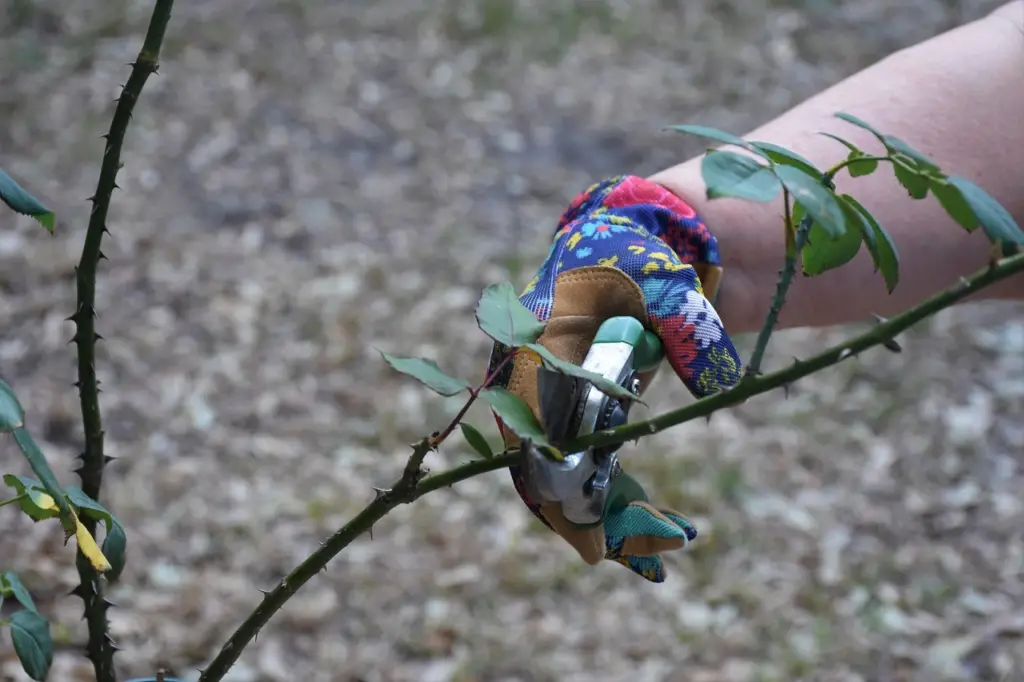
Mastering the technique of pruning is just as important as knowing the right season. Whether you are working in autumn or spring, the physical method of cutting your rose bushes remains largely the same. Always start with sharp, sterilized bypass pruners and a pair of thick, thorn-proof leather gardening gloves.
Follow these simple steps for a successful pruning session:
- Sanitize your tools: Wipe your pruners down with rubbing alcohol or a household disinfectant to avoid spreading diseases between plants.
- Remove the 3 Ds: Cut away any wood that is dead, damaged, or diseased. Dead wood is brown or black inside; live wood has a creamy white center.
- Clear the center: Snip out any weak, spindly canes or branches that cross through the center of the bush to improve air circulation and sunlight penetration.
- Make the cut: Cut about one-quarter inch above an outward-facing bud at a 45-degree angle, sloping away from the bud so rainwater runs off the wound.
- Clean up debris: Rake up and dispose of all pruned branches and fallen leaves from around the base of the plant to prevent pests and fungal diseases.
Troubleshooting Common Pruning Mistakes
Even experienced gardeners occasionally make mistakes when managing their rose bushes. One of the most common errors is making a flat cut or cutting too far above the bud, which leaves a stub that eventually dies and rots back into the main cane.
Another frequent mistake is using dull pruners that crush the plant tissue instead of making a clean slice. Crushed stems create entry points for opportunistic pests and fungal spores like black spot. Always sharpen your blades at the start of every gardening season and oil the joints to keep them moving smoothly.
Finally, do not be afraid to take off enough wood. Beginners often make the mistake of only giving a light trim, which leads to overcrowded, messy bushes with smaller flowers. Trust the process, be brave with your cuts in the spring, and your roses will reward you with an abundance of gorgeous blooms.
Frequently asked questions
Can I prune my roses in the fall?
You should generally avoid heavy pruning in the fall because it can stimulate tender new growth that gets damaged by winter frosts. In cold zones, only do light wind-reduction cuts, while mild winter zones allow for gentle sanitary clean-up.
When is the absolute best time to prune roses?
The best time to do your main, heavy pruning is in early spring just as the leaf buds begin to swell and turn red, but before they fully open.
What tools do I need for pruning roses?
You need a pair of sharp bypass pruners (avoid anvil pruners as they can crush stems), thick leather gardening gloves, and rubbing alcohol to sterilize your blades.
Should I cut off all my rose leaves in the fall?
Removing diseased leaves from the ground around your roses in the fall helps prevent fungal diseases from overwintering, but stripping healthy leaves from the bush is usually unnecessary.
Sources & methodology
- Hardiness zones: USDA Plant Hardiness Zone Map.
- For local conditions, check your state’s cooperative extension service.
- Written and reviewed by the Biokies editorial team. Last updated November 18, 2026.
Photo: Pexels / Pixabay
📌 Save this guide for later on Pinterest
 Save